

Muhammad Faizal bin Abdul Rahman
Download PDF
Jan 13 2026
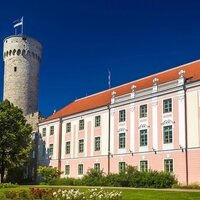
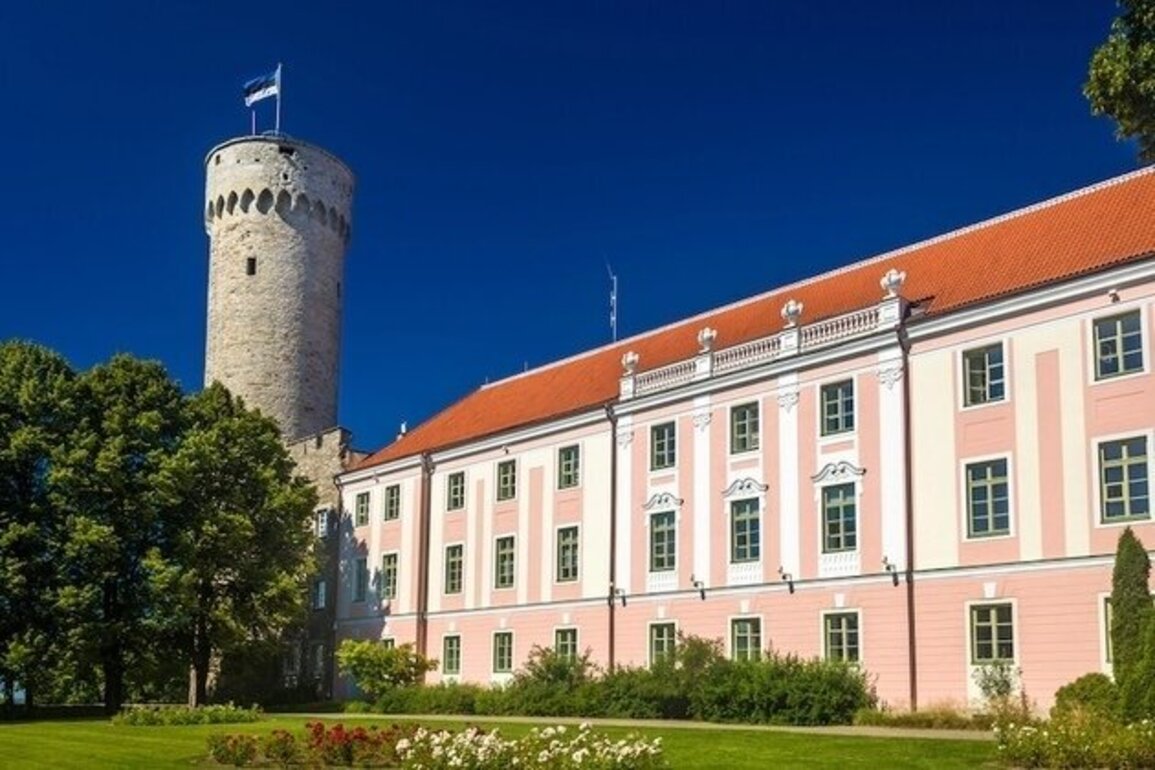
Leonid_Andronov/DepositphotosEstonias historical experience with Soviet control and malign Russian activities has shaped its national security and regional security outlook. Since Russia launched a full-scale invasion of Ukraine in 2022, Estonia has been relentless in strengthening its national defence and pursuing an active foreign policy to prevent a similar fate from befalling itself. This provides researchers a useful case study for the analysis of the national and regional security interests of small states as Estonia has stood between a rules-based international order that serves the interests of small states and one where powerful states prey on the weak.
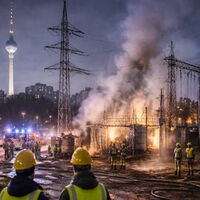
In 2007, Estonia became one of the first states in the world to experiencecyber and information threatsthat disrupted its national security. The removal of the Soviet era Bronze Soldier statue in Tallinn prompted cyberattacks that took down the websites of Estonian banks, government agencies, and media outlets, thereby impacting the lives of citizens. Concurrently, disinformation from Russian sources exacerbated the public order situation. Fast forward to the present, Estonia is at the frontlines of Russian hybrid warfare. It experienced a power outage in December 2024 when theEstlink 2subsea cable connecting Estonia to Finland was cut by a vessel believed to be part of Russias shadow fleet. The city ofNarva, which operates one of Europes crossing points to Russia, has seen surveillance blimps from the adjacent Russian town of Ivangorod infiltrate its airspace, and residents have been subjected to Russian influence activities. The threat situation has worsened following the September 2025intrusionof Russian MiG-31 fighter jets into Estonian airspace for 12 minutes.
Estonias national defence and foreign policy initiatives, which serve as deterrence against what Estonia perceives as an existential threat from Russia, comprise three main areas. Firstly, Estonia has been one of the few member states of the North Atlantic Treaty Organisation (NATO) that consistently spends about2%of its GDP on defence since 2013. In March 2025, Estonia decided to raise its defence spending to at least5%of its GDP beginning from 2026. Defence investments will be informed by lessons from the war in Ukraine and aim to enhance military capabilities in the areas of deep-strike capabilities, air defence, electronic warfare, and drone warfare. The Estonian Defence League, a volunteer military organisation, will also receive funding to enhance its members combat readiness. Given the importance of protecting critical undersea infrastructure in the Baltic Sea, Estonia aims to boost its maritime security capabilities, including considering aLittoral Mission Vessel(LMV) developed jointly by Swedens Saab and Singapores ST Engineering.
Secondly, Estonia has leveraged its strengths in digitalisation to develop digital security measures to ensure its national resilience against external threats. It established the firstdata embassyoverseas to protect government data and maintain public services in the event of major cyber-attacks or military invasion. It also led to the establishment of theTallinn Mechanismin 2023, an international initiative to support Ukraines cybersecurity needs. Estonia is also one of the pioneers of cyber diplomacy and has been advocating for cyber norms, the application of international law and responsible state behaviour in cyberspace. Its advocacy has expanded to include other aspects of the cyber-physical domain, such as the security of critical undersea infrastructure (CUI), which an Estonian delegation addressed duringSingapore Maritime Week2025.
Thirdly, Estonia supports the regional security architecture by meeting NATOs2014 guidelineon defence spending2% of GDPand backing Europes multilateral security initiatives. Estonia hosts the NATO Cooperative Cyber Defence Centre of Excellence (CCDCOE), organiser of the multinational cyber defence exercise Locked Shields. Its 1st Infantry Brigade base inTapahosts a NATO battlegroup that, alongside the Brigades Scouts Battalion, helps deter invasion as part of NATOs defence of Europes eastern flank from the Russian threat.
Estonia will likely sustain or expand these three efforts, as its resources allow. This is crucial, as the threat environment may worsen. Concerns are rising thatNarvacould be the next target of Russian expansionism by military force. In 2022, President Putin commented that Narva had historically been part of Russia and needed to be reclaimed. These fears will likely intensify in 2026 as Ukraine faces U.S. pressure to cede territory, enabling Russia to meet its strategic goals. Meanwhile, the U.S. remains committed to the NATO battlegroup in Estonia. However, the weakening U.S.-Europe relations risks undermining NATO.
As the security outlook for Estonia and Europe looks gloomier in 2026, Estonia will also need to scale up its engagements with foreign states. International cooperation, which is one of the key areas inEstonias National Security Concept, including maintaining global attention and support for Ukraine, is crucial not only to Estonia but also intertwined with the future of the rules-based international order, which could determine the fate of other small states. This key area applies to like-minded partners beyond Europe, including Asia, as well as states that have normal relations with Russia.
Estonias efforts to pursue this area have been happening in earnest. In October 2025, at the 10thSingapore International Cyber Week(SICW), Estonias Ambassador-at-Large for cyber diplomacy, Helen Popp, remarked that states that conduct malicious activities in cyberspace should face consequences. Russias Deputy Minister of Foreign Affairs Sergey Vasilievich Vershinin was present at the 10th SICW. And in November 2025, Estonian Foreign Minister Margus Tsahknavisited Beijing, marking the first such visit by an Estonian foreign minister since 2015. He called on China to cease its economic support for Russias war machinery and join Western efforts to pressure Russias President Putin to accept a ceasefire.
A fractured international order, perceptions of Western double standards in international politics, and domestic issues could lead more states to prioritise their own strategic interests over the principles of international law. These interests include maintaining historical relations with Russia, non-alignment and positioning Russia as a counterbalance to China and the U.S. The risk of ambivalence towards the Russia-Ukraine war could grow if the war is prolonged, and hence, states may choose to view it as distant and focus on security issues closer to home.
Amid these considerations, certain states may deem it necessary to partner with Russia rather than punish it. For example, the Association of Southeast Asian Nations (ASEAN) and Russia are developing a new 10-yearcooperative roadmap. Following the 2025 review of the VietnamRussia Comprehensive Strategic Partnership, Vietnam is exploring greatercooperationwith Russia across several developmental areas, including cybersecurity and nuclear energy. Indonesia and Russia conducted their firstbilateral naval exercisein November 2024. And in December 2025, Russias President Putinvisited New Delhi,where he met with Indias Prime Minister Narendra Modi and discussed various areas of bilateral cooperation, including trade and weapons sales.
When the EUs High Representative for Foreign Affairs and Security Policy, Kaja Kallas, spoke in Asia at the2025 IISS Shangri-La Dialogue, she remarked that Ukraines defence is Europes and Asias common security. She had delivered a similar message as the Estonian Prime Minister at the2023 IISS Shangri-La Dialogue, saying Europes and Asias security is interlinked. Despite this, Estonia (and Europe) has not gained the hoped-for support from Asia against the Russian threat. But looking ahead, a sharedgeopolitical challenge may bring greater alignment betweenthe security thinking of Estonia (and Europe) and Asia as concerns about the reliability of U.S. security partnerships, Trumps weaponisation of trade, and rising unilateralism are hastening the fracture of the international order.
Further Reading on E-International Relations
- Opinion Estonias Soft Power through Technology
- Opinion Estonias Kaja Kallas for NATO Secretary-General?
- How the War in Ukraine Strengthened Latvias European Credentials and International Standing
- Opinion A New World Order? From a Liberal to a Post-Western Order
- Small Grants from Great Powers: Academic Integrity vs. Information Warfare
- Opinion (Un)Sustainable World Order
About The Author(s)
Muhammad Faizal Bin Abdul Rahmanis a Research Fellow with the Regional Security Architecture Programme, Institute of Defence and Strategic Studies (IDSS) at the S. Rajaratnam School of International Studies (RSIS), Singapore.
TagsEstoniaRussia