

The United States, China, Russia, ASEAN and the Geopolitics of the Islands Watching Over Two Oceans
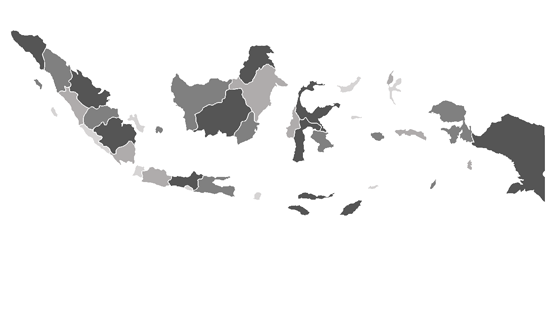
. Indonesia is not a peripheral country in Southeast Asia. It is the largest archipelago in the world, a nation spread across more than 17,000 islands, with more than 280 million inhabitants and the largest economy in ASEAN. Its geography is not tropical decoration. It is pure power. Indonesia sits between the Indian Ocean and the Pacific, on maritime corridors that connect energy, goods, food, manufacturing, minerals, and imperial ambitions. That is why Jakarta does not look at the world from the shore. It looks at it from the hinge.
. The Strait of Malacca, the Lombok Strait, and other nearby maritime passages turn Indonesia into a decisive piece of global trade. A substantial share of the energy and goods that connect Asia, the Middle East, Europe, and the Pacific moves through those waters. If Malacca closes, the world does not merely change routes. It changes prices, nerves, and military doctrine. That is why Indonesia does not need to shout in order to be important. It only needs to exist where ships cannot improvise too much.
. The United States sees Indonesia as a major piece of the Indo-Pacific. Washington needs partners, ports, agreements, military exercises, maritime surveillance, and an ASEAN capable of not falling completely under Chinese influence. It speaks of freedom of navigation, international rules, and regional stability. But behind the friendly language lies the old calculation of power. Indonesia is not only a democratic or commercial partner. It is a soft wall against China, a bridge toward the Indian Ocean, and an indispensable piece to prevent the western Pacific from having a single owner.
. China looks at Indonesia with a different kind of patience. Beijing sees nickel, coal, palm oil, ports, railways, markets, manufacturing, infrastructure, and access to the maritime heart of Southeast Asia. Indonesia holds a key position in the energy transition because it is a global nickel power, an essential metal for batteries, stainless steel, and green industrial chains. Chinese companies have invested heavily in smelters, industrial parks, and mineral processing. China does not need to conquer Indonesia. It only needs to enter through credit, infrastructure, the factory, and the contract.
. Russia appears farther away, but it is not absent. Moscow sees Indonesia as part of the multipolar world trying to escape automatic obedience to the West. Energy, weapons, oil, wheat, diplomacy, and sanctions run through that relationship. In 2026, Indonesia even explored schemes to import large volumes of Russian crude oil, in a move that reveals its desire to diversify sources and protect its energy security. For Jakarta, buying from some and speaking with others is not betrayal. It is survival.
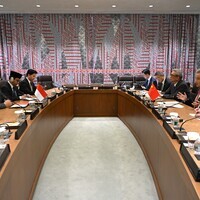
. Indonesias strength lies in its calculated ambiguity. It does not want to be a satellite of the United States or an economic subordinate of China. Nor does it want to break with Russia or lose leadership within ASEAN. That tradition of free and active foreign policy comes from Bandung, from nonalignment, and from the memory of a Global South that learned early that choosing a master is not independence. Under Prabowo Subianto, that line seems to continue with more gestures, more economic nationalism, and a greater search for its own room to maneuver.
. But Indonesia also has enormous fragilities. It is a country of thousands of islands, religions, ethnic groups, inequalities, environmental pressures, separatist tensions, and gigantic logistical challenges. The political capital is moving toward Nusantara, while Jakarta slowly sinks under the weight of urbanization, water, and poor planning. Growth needs investment, but sovereignty demands conditions. The energy transition demands nickel, but nickel leaves environmental scars. Geopolitics promises greatness, but everyday life demands rice, jobs, electricity, transport, and stable prices.
. The hard figures show the size of the game. Indonesia is the fourth most populous nation on the planet, the largest economy in Southeast Asia, and an archipelagic power. The World Bank ranks it as the worlds 16th-largest economy and highlights its more than 300 ethnic groups. In addition, Indonesia holds close to 42% of the worlds nickel reserves, according to specialized studies, and has become the main engine of global mining growth in that metal. Reuters and AP have reported that Prabowos government seeks to strengthen state control over strategic exports such as coal, palm oil, and minerals, citing enormous losses from undervaluation and evasion.
. Indonesia will become increasingly important because the 21st century is being played on three levels that it brings together in a single body: oceans, minerals, and strategic autonomy. The United States wants it close. China wants it integrated. Russia wants it available. ASEAN needs it as a leader. Europe looks at it for resources, climate, and trade. India watches it through the Indian Ocean. Australia measures it through security. And Jakarta tries to walk among all of them without becoming anyones carpet. That will be its historical test: to turn geography into sovereignty and resources into development, without selling its destiny for quick financing or foreign protection.
. The Indonesian archipelago looks scattered, but its importance is deeply compact. In its straits, ships intersect. In its mines, batteries intersect. In its diplomacy, Washington and Beijing intersect. In its memory, Bandung, ASEAN, and the old dream of the Global South intersect. Indonesia does not need to declare itself a power in order to act like one.
Brief bibliography
- World Bank - Indonesia Overview / Data.
- Reuters - Indonesias Prabowo announces economic and commodity export policy targets, 2026.
- AP - Indonesia tightens state control over exports of vital commodities, 2026.
- IFRI - The Prospects of Indonesias Nickel Boom Amidst a Sy.
Mauricio Herrera Kahn