


The United Nations has condemned two consecutive days of deadly attacks on peacekeepers serving with the UN Interim Force in Lebanon (UNIFIL), amid rising hostilities between Israeli forces and Hezbollah militants.
Further attacks have been reported across the Middle East as the war enters a second month, with two more Indonesian peacekeepers killed in Southern Lebanon on Monday, following the death of a fellow blue helmeta day earlier. On the diplomatic front, the UN has announced a taskforce to restore the flow of fertilizer and aid through the Strait of Hormuz, while the UN's atomic watchdog confirms an attack on a heavy water facility at Khondab in Iran. Stay with us for live updates on this and UN agencies. App users can follow coveragehere.
Diplomats have been highlighting Security Councilresolution 1701in official meetings and in the corridors over the busy High-Level Week at UN Headquarters.
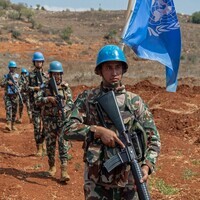
Two Indonesianpeacekeeperswere killed on Monday, and two morewereinjured, in an explosion that hit aUNIFILlogisticsconvoy, destroying their vehicle.
The incident took placenear Bani Hayyanin southern Lebanon a dayafteranother Indonesianblue helmetwas killed when a projectile hitthemissionsbaseinEttTaibeand exploded.
A colleaguewho wascritically injuredand evacuated to the capital,Beirutremains in hospital.
Never a target
UNIFIL is conductinginvestigationsto determine the circumstances of these tragic developments, the head of UN Peace Operations, Jean-Pierre Lacroix, said in New York.
We strongly condemn these unacceptable incidents. Peacekeepers must never be a target,he told journalistsat a press briefingat UN Headquarters.
Wealsoremain seriously concerned about several aggressivebehaviourincidents against UNIFIL peacekeepers in the past couple of days,he added.
Widening regional risks
Mr. Lacroix affirmed that UNpeacekeepersremain on the ground, carrying outSecurity Council-mandated tasks, in these extremely dangerous conditions.
Tensions continue to rise in the Middle Eastmore than a month after the United States and Israel bombed Iran, prompting Iran to carry out retaliatory strikes on several countries in the region.
At the outset, UNSecretary-General Antnio Guterreswarnedthat thecrisisriskedigniting a chain of events that no one can controlin the most volatile region of the world.
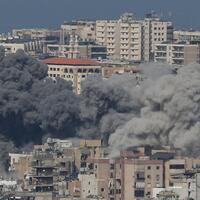
Since 2 March, more than 1,200 people in Lebanon have been killed in the escalation in hostilities between Hezbollah and Israel, said UN Special Coordinator for the country Jeanine Hennis-Plasschaert.
Determiningthe circumstances
Following thedeadly shellingincidenton Sunday,UNIFILSpokespersonKandiceArdieltoldthat a probe was underway but will take time.
For the moment, we don't have a clear idea of exactly what happened, but thats what the investigation will find out, she said.
Once we have that investigation concluded, per usual practicewellshare that with the parties. And depending on the result, if we find a party responsible, we will let them know and we will formally protest that to them.
Service and sacrifice
More than8,000peacekeepers fromnearly50countries serve withUNIFIL.These men and womendemonstrate utmost courage and commitment to advancing international peace and security far away from home,said Mr. Lacroix.
The missionwasestablishedin 1978 by theUNSecurity Counciltoconfirm the withdrawal of Israeli forces from southern Lebanon, restoreinternational peace and security, andassistthe Lebanese Government in ensuring the return of its effective authority in the area.
Ithasplayedan important rolein advancing peace and security,including bypatrolling the Blue Lineof separationbetweenthe two countries.
A very dangerous and volatile situation
Peacekeepers alsoassistin implementingtheSecurity Councilresolutionthatbrought an end tomore than30 daysofhostilities between Israeli forces and Hezbollah in 2006.
The currentclashes have led toa multiplicity of violations ofresolution 1701 (2006), Mr. Lacroixsaid, citing strikes in both directions across the Blue Line as well as the presence of Israeli forces in Lebanon.
Weve seen a great deal of Israeli incursions into South Lebanon in different areas, including near our headquarters in Naqoura, where about a week or so ago, in past days, we had some very violent battles that we could hear taking place, said Ms. Ardiel.
Our headquarters here wasimpactedby bullets, by shrapnel. Rockets evenimpactedinour headquarters, so it wasavery dangerousand volatilesituation.
No military solution
Mr. Lacroixwas adamant thathostilities canonly be resolved throughdiplomaticmeans.
There cannot be a military solution.Therehas tobe a political solution, hesaid.
The framework is there for a political solution -resolution 1701- to which all the parties are still committed, to the best of what we hear from them.