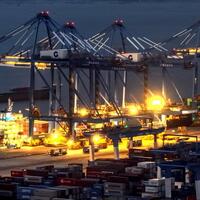



BRUSSELS (CN) - The European Union and Indonesia wrapped up negotiations Tuesday on a sweeping trade deal that will tear down nearly all trade barriers between the bloc's 27 countries and Southeast Asia's biggest economy, potentially saving European companies more than 600 million euros ($666 million) a year in customs fees.
The agreement removes import duties on 98.5% of goods between the two regions, providing European firms with access to Indonesia's market of 283 million people, according to the European Commission.
Indonesia will scrap steep tariffs on European products, 50% on cars, up to 25% on chemicals and 15% on machinery and pharmaceuticals. A separate investment protection deal shields 25.1 billion euros of European investments in Indonesian companies, granting access to international arbitration for disputes.
The trade of goods and services between Europe and Indonesia amounts to approximately 36 billion euros annually, making Indonesia Europe's fifth-largest trading partner among the 10 Southeast Asian nations.
European Commission President Ursula von der Leyen stated that the agreement advances the EU's efforts to diversify its trading partners and secure critical raw materials. Indonesia is a leading supplier of minerals essential for the green tech and digital industries.
"Our deal with Indonesia creates new opportunities for businesses and farmers in a major and growing economy," von der Leyen, currently attending the U.N. general assembly in New York, said in a statement Tuesday. "This also provides us with a stable and predictable supply of critical raw materials, essential for Europe's clean tech and steel industry."
The deal comes as Brussels races to cut its economic reliance on the United States and China amid growing competitive pressures. China's trade surplus with Europe has jumped nearly 20% since December, while European leaders admit a recent pact with Washington was struck "largely on American terms," given Europe's security dependence on the U.S.
EU's trade chief, Maros Sefcovic, celebrated Tuesday's agreement as "a historic breakthrough" and "a game-changer for both our economies" at a press conference in Bali, Indonesia.
"In a world of rising protectionism and fragile supply chains, when many turn inward, the CEPA sends a clear signal that the EU and Indonesia are choosing openness and partnership," Sefcovic said.
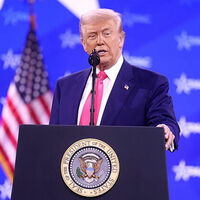
The timing underscores the intense competition for Indonesia's allegiance. Just days before the preliminary EU-Indonesia "political agreement" was reached in July, President Donald Trump announced his own "historic trade deal" with Indonesia that eliminates tariffs on 99% of American products while requiring Indonesia to pay the U.S. a "reciprocal tariff rate of 19%."
The rival American deal also secures unrestricted access to Indonesia's critical minerals - the same resources Europe desperately needs to reduce its dependence on China.
Indonesia aims for the pact to take effect Jan. 1, 2027, with trade expected to double within five years.
Agricultural gains amid palm oil disputes
Europe and Indonesia make natural trading partners - with Indonesia's main exports to Europe being palm oil, cocoa and coffee - products the EU doesn't produce domestically. Brussels primarily exports dairy and other animal products, accounting for approximately 1 billion euros worth of agricultural products annually, according to Commission data.
It includes a dedicated protocol on palm oil aimed at promoting sustainable production, though environmental groups have previously criticized EU trade policy for failing to adequately address deforestation linked to palm oil.
The palm oil provisions come amid ongoing trade tensions. In July, the EU's top court upheld anti-dumping duties of up to 46.4% on Indonesian palm oil imports, while Indonesia has filed disputes at the World Trade Organization.
Even with the new trade deal, the EU Deforestation Regulation looms large. The regulation, which bans imports tied to freshly cleared forests, threatens Indonesian palm oil producers and could "reduce the effectiveness of the trade agreement," industry officials warn.
On Tuesday, the EU announced a one-year delay for the regulation, citing IT system concerns. The postponement is the second delay impacting the measure, following complaints from Indonesia and other trade partners. The rules were originally set to take effect on Dec. 30 and now fuel doubts over whether commercial interests are eclipsing environmental pledges.
The timing was no coincidence. A week earlier, Indonesia sent farmers to Brussels to lobby against the deforestation rules, warning that palm oil buyers were shifting to Malaysia. Indonesian diplomats made clear they wanted regulatory relief tied to any trade deal.
The pact also protects 221 European foods with geographic labels from potential imitations, including French cheeses and Italian balsamic vinegar. It streamlines export procedures for European food companies while carving out sensitive goods like rice, sugar, eggs and fresh bananas from liberalization.
The deal establishes zero tariffs on green goods and liberalizes renewable energy and energy-efficient products from the first day the agreement takes effect.
Critical materials strategy to counter China
Indonesia holds vast nickel and cobalt reserves critical for Europe's batteries and green technology. The deal aims to provide European manufacturers with stable access to these minerals and reduce their reliance on China, which dominates rare earth supplies and maintains a trade surplus of over 300 billion euros with the continent.
The diversification push comes as European leaders acknowledge they cannot meet climate goals without critical materials that are currently dominated by Chinese suppliers. In 2023, 98% of Europe's solar panels came from China, a stark reminder of the risks the Indonesia agreement seeks to ease.
The agreement was nine years in the making, with 19 rounds of negotiations since 2016. In July, President Prabowo Subianto and von der Leyen announced a "political agreement" in Brussels. But Prabowo, who took office in October, carries baggage from Indonesia's military era that has unsettled human rights groups.
It was the uncertainties caused by "tariff war and protectionism" between major countries that pushed both regions to "seek certainty through a stable bilateral agreement," Indonesian Economic Affairs Minister Airlangga Hartarto said then.
The deal still needs approval from the European Parliament and Indonesia's government - a process likely to be contentious given Indonesia's track record on deforestation and labor rights. To address those concerns, the deal includes binding environmental and labor standards that can be enforced through trade penalties, though such provisions have proven difficult to implement.
Indonesia is the world's 12th largest economy outside the EU, with an annual gross domestic product of 1.3 trillion euros, accounting for 35% of Southeast Asia's total economic output. It is the EU's fifth largest trade partner in the region, with 9.7 billion euros in EU exports in 2024, making it an attractive destination for foreign investment, the commission said.
Courthouse News correspondent Yuval Molina is based in Brussels, Belgium.
Source: Courthouse News Service